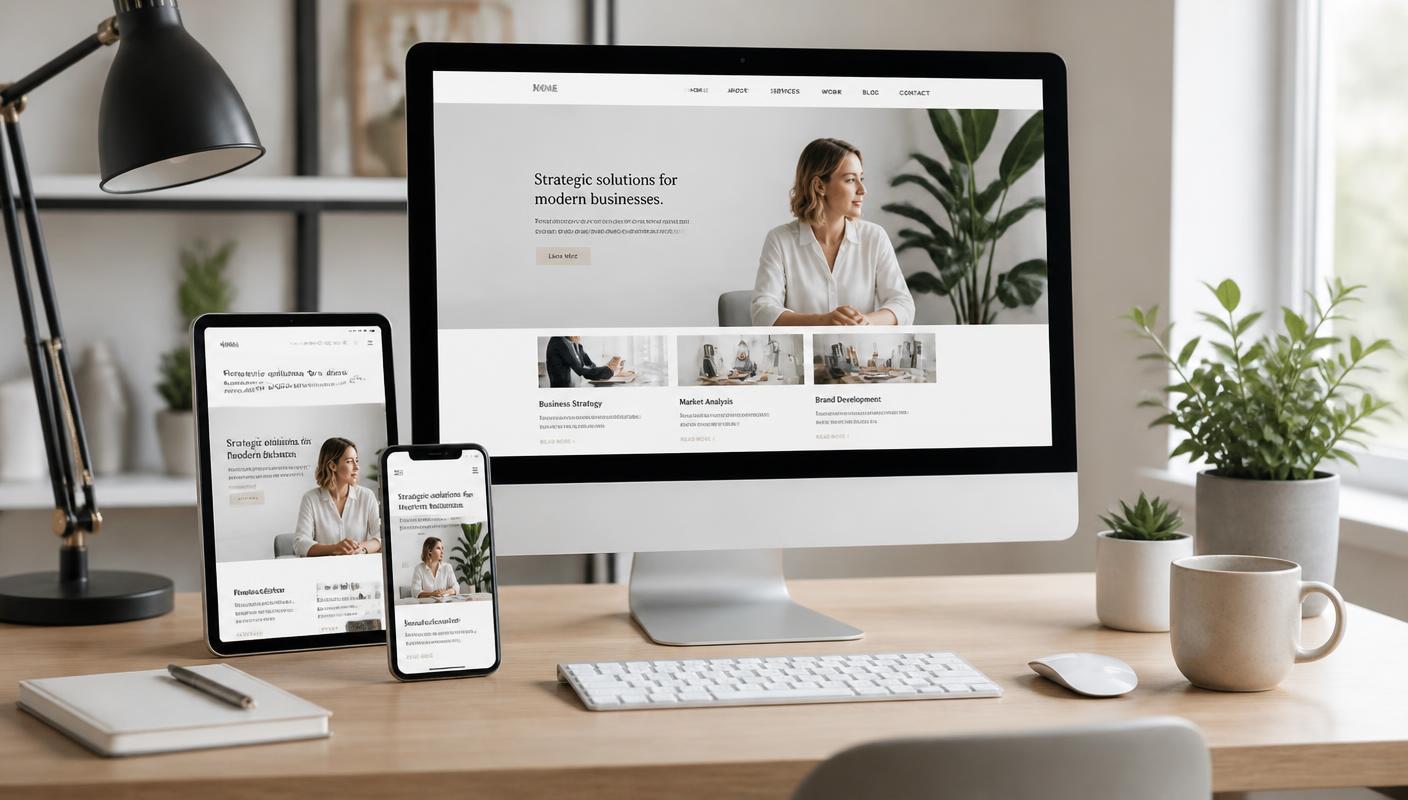
What does a professional website really need?
A professional website is the sum of strategy, user experience, solid development, performance, SEO foundations, conversion, measurement and maintenance. Sometimes the right answer is not a website at all, but a platform with specific functionality.
 Sylvain
When someone asks for website quotes, the numbers come back wildly different for what looks like the same request. The difference is rarely the page count. It is what each proposal includes, and above all what it assumes about the goal of the project.
A commercial website is not a single job
A good looking page is a small part. A website that serves the business combines several disciplines that have to work together.
- Strategy: what commercial goal the site serves and how it is measured.
- User experience: clear paths for visitors.
- Design: a credible and consistent identity.
- Copy: language that explains and convinces instead of filling space.
- Development: stable, secure and maintainable code.
- Mobile: designed for the small screen first.
- Performance: fast loading on real connections.
- SEO foundation: a structure that can be found.
- Security: protection of data and access.
- Conversion: obvious paths to contact or purchase.
- Measurement: knowing what generates enquiries.
- Accessibility: contrast, text size and keyboard navigation.
- Integrations: connection to the tools the company already uses.
- Maintenance: updates, backups and fixes.
Strategy: the invisible work that decides everything else
Strategy defines who the site is for, what problem it solves, what action we want the visitor to take and how we measure whether that happens. It is the cheapest phase to change your mind in and the most expensive to skip. A beautiful site built on a vague strategy produces pleasant visits and few requests.
User experience and design
User experience is about journeys: how many clicks to the request, whether the menu reflects how the client thinks, whether information appears in the order the question arises. Design adds credibility and visual coherence, but it does not fix a confusing structure. When both work together, the visitor moves forward effortlessly.
- A short menu using names the client recognises instead of internal jargon.
- One clear primary action per page.
- Essential information visible without heavy scrolling on mobile.
- Contrast, text size and keyboard navigation suitable for accessibility.
Copy that explains and convinces
Copy is the most undervalued part of a project and the one that most influences conversion. Writing for the web differs from writing a brochure: short sentences, concrete benefits, answers to real objections and the same vocabulary clients use when they search. A large part of search relevance is decided here too.
Development, security and integrations
On the technical side the goal is a stable, secure base that can grow. That means organised code, updates that do not break what exists, backups and personal data protection in line with GDPR.
- Active security certificate and forms protected against abuse.
- Client data handled with a legal basis and a real privacy policy.
- Integrations with what the company already uses, such as invoicing, CRM, payments or calendars.
- A structure ready to add pages and features without rebuilding everything.
Performance and SEO foundations
Performance and visibility are not final touches, they are decisions taken during the build. Optimised images, defined dimensions to avoid layout shifts, code without unnecessary weight and a stable URL structure are worth more than any rushed fix after launch. The detail is in SEO for businesses in Portugal.
Conversion and measurement
Conversion turns a visit into a contact. Measurement tells you which pages achieve it. Without both, any investment in visibility runs blind, because nobody knows what is worth reinforcing. That topic is developed in from website to lead machine.
Why a low cost template site and a professional project are different products
A ready made template filled in quickly can be enough to validate an idea, present a simple portfolio or establish a presence. That is a legitimate choice and in many cases it does the job.
A professional project answers a different need: generating business predictably, integrating processes, supporting growth and being maintained for years. The work on strategy, performance, conversion, measurement and maintenance exists in the second case and does not exist in the first. Comparing only the final price ignores that difference. The cost structure is broken down in what a website costs.
The business questions that come before design
- 1Who is the ideal customer and what problem do they want solved?
- 2What does a visitor need to know before trusting the company?
- 3What is the next action we want them to take?
- 4How will this website be found?
- 5How are enquiries captured and recorded?
- 6What happens internally after an enquiry arrives?
- 7How do we measure whether it works?
- 8Who keeps the platform technically healthy?
If a proposal touches none of these questions, it is quoting pages rather than outcomes.
The right answer is not always a website
Many requests start with we need a new site and end somewhere else, because the real problem is operational. It pays to identify that before investing.
Corporate and service websites
The right fit when the goal is to explain the offer, build trust and receive enquiries. It is the base for almost every service business. See what it needs in professional websites.
Online stores
Needed when there is direct selling with a catalogue, payments, shipping, returns and order management. An online store carries tax and logistics requirements a corporate site does not.
Booking systems
Clinics, holiday rentals, equipment hire, hospitality and any service with a calendar need real time availability, confirmations and often prepayment. A contact form is not a substitute for a booking system.
Landing pages
For specific campaigns, a dedicated landing page converts better than the homepage, because it answers exactly the search that brought the visitor.
Web applications and custom software
When the internal process is the product, the right answer is a web application or custom software: project management, client portals, B2B lead qualification, team planning or integration with existing systems.
| Situation | Usual solution |
|---|---|
| Service company wanting more enquiries | Website with service pages and conversion |
| Direct product sales | Online store |
| Calendar, availability and appointments | Booking system |
| Paid campaign with a single goal | Dedicated landing page |
| Complex or manual internal process | Web application or custom software |
What quotes usually leave out
- Measurement configured and verified at launch.
- Copy written for search and for conversion.
- Real testing on mobile and on slow connections.
- A structure prepared to grow with new pages.
- A maintenance plan and technical ownership after launch.
- Clear handover of domain, hosting and credentials.
After launch
A website is a living platform. It needs updates, monitoring, backups and continuous improvement. That is what technical management through WebCastelo Care covers, so the site does not quietly degrade over the months.
Frequently asked questions
How do I compare quotes with very different prices?
Compare scope, not the final figure. Check strategy, content, performance, measurement, training, warranty and maintenance. Then compare the total cost over two years.
How many pages should a professional website have?
As many as needed to cover each relevant service, the social proof and the legal pages. The quality of each page counts more than the quantity.
Can I start small and grow later?
Yes, and it is often the better decision. What matters is that the base is built to grow, instead of forcing a full rebuild a year later.
How do I know which solution fits my case?
Describe the commercial process instead of the format. If you prefer quick guidance, the solution finder gives a recommendation in a few minutes.
About the author
Sylvain
Founder, WebCastelo
Sylvain is the founder of WebCastelo and works every day on websites, online stores, booking systems, custom software, SEO and digital advertising for companies in Portugal and the rest of Europe. He writes about what he sees in real projects: what works, what costs money without a return and what is worth doing first.