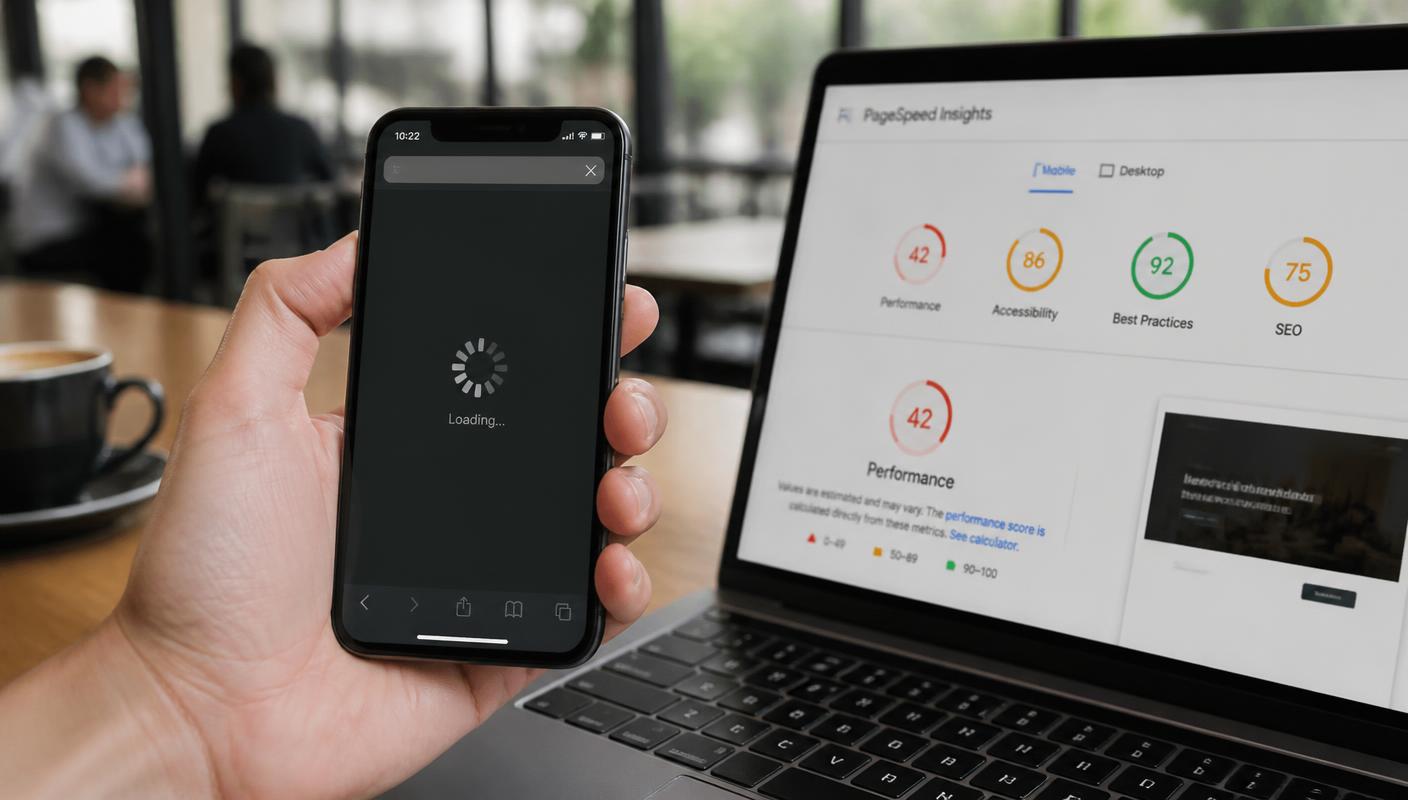
How to get more customers through your website
To generate customers, a website needs a clear value proposition, action-focused pages, credible proof, simple ways to get in touch, and measurement of what actually works. Traffic is only the first part.
 Sylvain
Start with your value proposition
First-time visitors need to understand what you do, who it's for, where you operate and what they gain by taking the next step. Replace generic phrases with concrete details: service, audience, region and a verifiable point of difference. A good way to test this is to show the page to someone outside your industry and ask what the business does.
One main action per page
Every page should have a single dominant goal: request a quote, book a call, start a booking or make a purchase. Competing calls to action scattered across the page split people's attention. The main button should appear early and repeat at natural decision points.
Dedicated landing pages
If you're running campaigns, sending all traffic to your homepage wastes budget. A dedicated landing page that continues the message from the ad typically performs far better than the same spend directed at the general site.
Trust at the right moments
- Previous work shown with context, not just attractive images.
- Genuine reviews, with a name and situation, placed near the call to action.
- Answers to common objections about price, timelines and responsibility.
- Clear identification of the company and the people behind it.
Forms people actually fill in
Ask only for what you need to take the next step. Every extra field reduces the number of submissions. Explain what happens next and how quickly you'll respond. Confirm submission with a clear message and an alternative way to get in touch.
Bookings and appointments
Where the service allows it, letting customers choose a time slot without exchanging messages removes friction and cuts down on admin work. It's the principle behind the booking systems we build for businesses that run on appointments.
Traffic with intent
Once your pages are ready to convert, it's worth growing the right kind of traffic. The organic work described in what SEO is attracts people actively searching. The campaigns explained in what SEA is let you choose exactly which searches to target.
Remarketing done sensibly
Showing your message again to people who visited decision pages can help in longer buying cycles. It should be time-limited, respect consent, and avoid chasing people who are already customers.
Measuring what matters
| Indicator | Question it answers |
|---|---|
| Enquiries per month | Is the site generating opportunities? |
| Source of enquiries | Which channels are worth the investment? |
| Conversion rate per page | Which pages persuade and which don't? |
| Quality of enquiries | Are the right customers arriving, or just curious visitors? |
| Time to respond | Are we losing enquiries because of delays? |
Response speed is often the factor with the biggest impact and the one least analysed. An enquiry answered the same day has a very different chance of closing.
Where to start this week
- 1Rewrite the top of your homepage with your service, audience and region.
- 2Trim your main form down to the essential fields.
- 3Place genuine reviews next to the call to action on service pages.
- 4Check that your phone number is clickable on mobile.
- 5Confirm that form submissions are being tracked as conversions.
About the author
Sylvain
Founder, WebCastelo
Sylvain is the founder of WebCastelo and works every day on websites, online stores, booking systems, custom software, SEO and digital advertising for companies in Portugal and the rest of Europe. He writes about what he sees in real projects: what works, what costs money without a return and what is worth doing first.