Online store in Portugal: what you need before launching
Before opening an online store you need an organised catalogue, payment methods suited to the Portuguese market, clear shipping rules, complete legal information, convincing product pages and a maintenance plan.
 Sylvain
Catalogue and product data
The quality of your catalogue shapes most of the work that follows. Every product needs a clear name, a useful description, consistent photography, a price, availability and, where relevant, size or colour variants. Well thought out categories and useful filters stop customers giving up by the third page.
Payments
In Portugal, offering card payment alone can cost you sales. It is worth considering the methods your audience actually uses, including local bank references and mobile payments, alongside cards. Each method carries different fees and settlement times, so the impact on margin should be worked out before you decide.
Shipping
- Costs by weight, volume or zone, with rules that are easy to understand.
- Realistic delivery times, including islands where relevant.
- A free shipping threshold, if it makes sense for your margin.
- Order tracking and automatic communication with the customer.
- A returns policy that is easy to find and easy to apply.
Legal information
An online store needs full company identification, terms and conditions of sale, a privacy policy, a cookie policy, information on the right of withdrawal and details of warranties. Prices should be shown clearly with taxes included for consumers, and the total cost must be presented before the purchase is confirmed.
Conversion
In a store, small details are worth real money: showing shipping costs early, allowing checkout without an account, reducing steps at payment, showing genuine availability, providing enough photographs and answering common questions directly on the product page. The general principles are covered in how to get more customers.
Mobile first
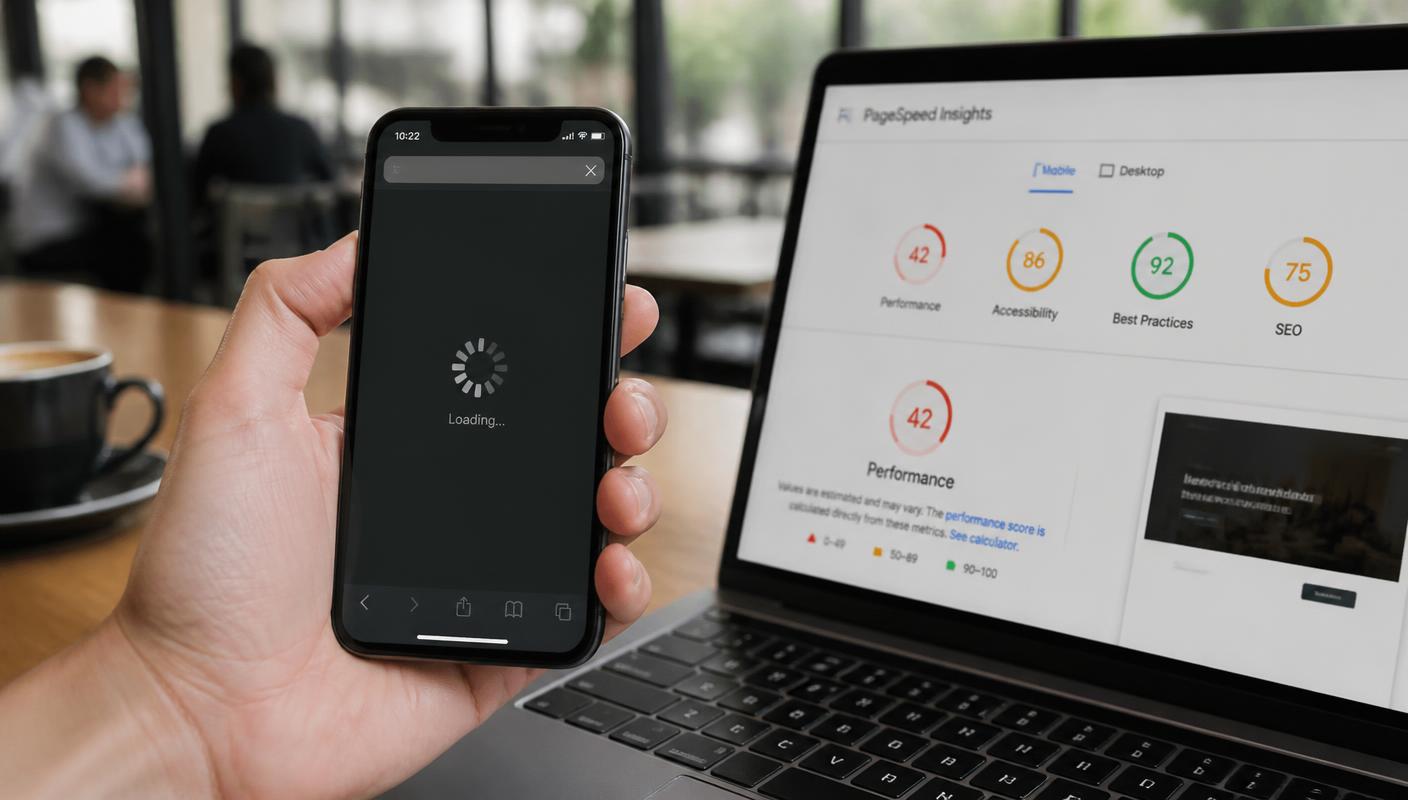
Most visits arrive from a phone, even when the final purchase happens on another device. That means fast listings, filters that work with a thumb, lightweight images and a checkout with no fields that are painful to fill in on a small screen. Image weight is covered in slow website.
Product pages that sell
| Element | Why it matters |
|---|---|
| Photos from multiple angles | Stand in for physical inspection |
| Specific description | Answers questions before contact is needed |
| Measurements and materials | Reduces returns |
| Visible delivery time | Prevents abandonment at checkout |
| Genuine reviews | Build trust in newer brands |
SEO for ecommerce
Categories with their own text, unique titles and descriptions per product, proper handling of variants and filters to avoid duplication, structured product data with price and availability, and fast pages. Without this, a store depends entirely on paid advertising.
Measurement
Track purchases with value, cart additions and checkout steps. Without this, you cannot know where customers drop off or which channels actually deliver returns.
Maintenance after launch
A store is a living system: security updates, stock, prices, campaigns, new payment methods and customer support. Set aside internal time or arrange a support plan before you launch, not after the first problem.
About the author
Sylvain
Founder, WebCastelo
Sylvain is the founder of WebCastelo and works every day on websites, online stores, booking systems, custom software, SEO and digital advertising for companies in Portugal and the rest of Europe. He writes about what he sees in real projects: what works, what costs money without a return and what is worth doing first.